


 BRAND CREATION IN A START-UP: BUILDING VALUE BEYOND A NAME
Building an Intangible Asset in the Digital Age
By CA Tarsem Chand Garg
FCA, ACMA, FICA, DISA, LL.B., IP, RV
IBBI/RV/10/2021/14160
Introduction
In today’s highly competitive and digitally connected economy, a start-up’s success depends not only on the quality of its products or services but also on the strength of its brand. Investors, customers, employees, lenders, and other stakeholders often form their first impression of a business through its brand identity. Consequently, brand creation has become a strategic business function rather than merely a marketing exercise.
Many entrepreneurs mistakenly believe that a brand is simply a name, logo, colour scheme, slogan, or design. While these elements contribute to a brand’s identity, they represent only its visible aspects. The true value of a brand lies much deeper—in the perceptions, emotions, trust, reputation, and experiences associated with it.
For start-ups seeking sustainable growth and long-term value creation, understanding the concept of branding is essential.
What is a Brand?
A brand is an intangible asset that differentiates an offering from competing products, services, or organizations. It embodies the collective perception that stakeholders develop regarding a business and its offerings over time.
A strong brand communicates credibility, consistency, quality, and value. It creates recognition in the marketplace and influences purchasing decisions.
According to renowned marketing expert Philip Kotler:
“A brand is a name, term, sign, symbol, design, or a combination of these intended to identify the goods or services of one seller and differentiate them from those of competitors.”
However, modern business realities have expanded this definition significantly. Today, a brand is not merely what an organization says about itself; it is what stakeholders believe and experience about that organization.
In simple terms:
A brand is the sum total of all perceptions, experiences, associations, and expectations attached to a business, product, service, or individual.
Brand as an Intangible Asset
From a valuation perspective, brands constitute valuable intangible assets capable of generating substantial economic benefits.
The International Standard on Brand Valuation, ISO 10668:2010, defines a brand as:
“An intangible asset, including but not limited to names, terms, signs, symbols, logos, and designs, intended to identify goods, services, or entities, creating distinctive images and associations in the minds of stakeholders, thereby generating economic benefits and value.”
This definition highlights an important fact often overlooked by start-ups:
A brand possesses measurable economic value.
A well-established brand can:
- Command premium pricing.
- Improve customer loyalty.
- Reduce marketing costs.
- Increase market share.
- Attract investors.
- Facilitate business expansion.
- Enhance enterprise valuation.
Many of the world’s most valuable companies derive a significant portion of their worth from their brands rather than their physical assets.
Why Branding Matters for Start-Ups
Start-ups operate in environments characterized by uncertainty, limited resources, and intense competition. In such circumstances, branding serves as a powerful differentiator.
A strong brand helps a start-up:
- Establish market credibility.
- Create trust among customers.
- Build emotional connections.
- Attract strategic partners.
- Improve customer retention.
- Strengthen competitive positioning.
- Support fundraising efforts.
- Enhance long-term business value.
For emerging businesses, branding should not be viewed as an expense but as an investment in future growth.
The Rise of Digital Brand Creation
The digital revolution has fundamentally transformed how brands are created, managed, and protected.
Traditionally, branding focused on trademarks, advertising, packaging, and physical customer interactions. Today, a brand exists simultaneously across websites, social media platforms, mobile applications, search engines, digital marketplaces, and online communities.
A modern brand launch therefore requires much more than a trademark registration certificate.
It requires the creation and protection of an entire digital ecosystem.
Whether a start-up is introducing a new company, product, service, or platform, its digital presence must be secured from the very beginning.
Failure to do so can expose the organization to cyber threats, impersonation, fraud, phishing attacks, and reputational damage.
Understanding Digital Brand Assets
Before launching a brand, entrepreneurs should identify and secure all critical digital assets associated with their business.
These assets typically include:
- Domain names
- Corporate websites
- Email systems
- DNS infrastructure
- SSL certificates
- Social media accounts
- Mobile applications
- Digital marketplaces
- Online business profiles
- Cloud-based communication platforms
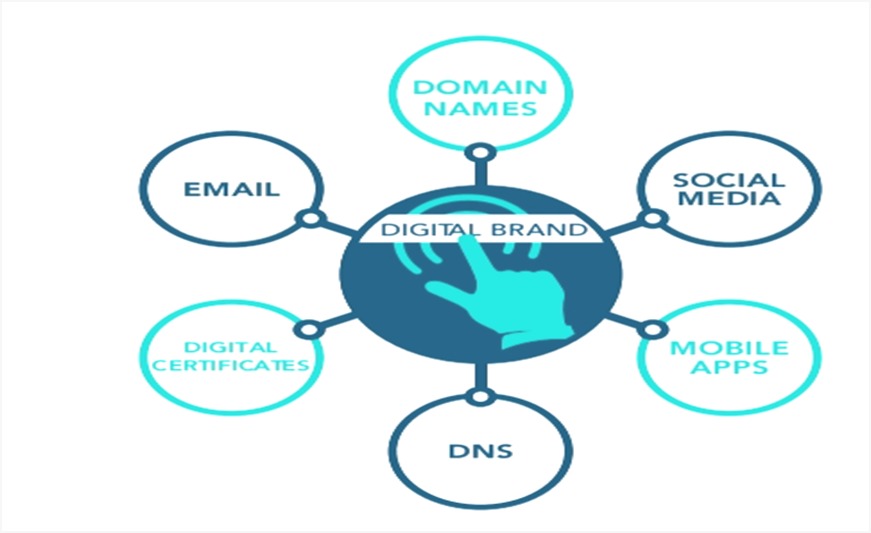
Many start-ups focus exclusively on business registration and trademark filings while overlooking these digital assets.
Unfortunately, cybercriminals and opportunistic third parties often act quickly to register similar domain names, social media handles, or applications, creating future legal and reputational challenges.
Registering and Protecting the Brand Name
One of the most critical stages of brand creation is securing ownership of the brand name across digital platforms.
The level of protection should correspond with the strategic importance of the brand.
For flagship brands, businesses should consider comprehensive protection across multiple jurisdictions and digital platforms.
Best Practices Include:
- Selecting a short, memorable, and easy-to-spell brand name.
- Avoiding unnecessary hyphens and complicated spellings.
- Registering domain names at the earliest opportunity.
- Securing country-specific domains in target markets.
- Registering relevant generic top-level domains (gTLDs).
- Acquiring common spelling variations and typo domains.
- Protecting industry-specific domain extensions.
- Maintaining confidentiality before public launch whenever possible.
A proactive registration strategy is significantly less expensive than future legal disputes and recovery actions.
Social Media Protection
In the digital era, social media often becomes the public face of a brand.
Start-ups should secure usernames and handles across major and emerging platforms, even if immediate use is not planned.
This approach provides several advantages:
- Prevents impersonation.
- Reduces phishing risks.
- Preserves future expansion opportunities.
- Protects brand consistency.
- Strengthens customer trust.
A consistent brand identity across all social platforms enhances visibility and credibility.
Building a Strong Digital Security Framework
Creating a digital brand without implementing cybersecurity measures is comparable to constructing a building without securing its foundation.
DNS Protection
DNS infrastructure serves as the backbone of online operations.
Businesses should utilize enterprise-grade DNS services with robust DDoS protection to maintain availability and resist cyber attacks.
SSL Certificates
Secure Sockets Layer (SSL) certificates are essential for protecting website visitors and customer information.
They:
- Encrypt communications.
- Enhance customer confidence.
- Improve website security.
- Support search engine rankings.
Domain Security
To prevent domain hijacking and unauthorized transfers, businesses should implement:
- Registry locks
- Registrar locks
- Multi-factor authentication
- Strong access controls
Email Security
Email remains one of the most common attack vectors.
Organizations should deploy:
- SPF (Sender Policy Framework)
- DKIM (DomainKeys Identified Mail)
- DMARC protocols
- Anti-phishing controls
These measures significantly reduce the risk of spoofing and fraudulent communications.
Monitoring and Enforcement
Brand protection does not end at launch.
Continuous monitoring is essential to identify unauthorized use and misuse of brand assets.
Organizations should regularly monitor:
- Domain registrations
- Social media accounts
- Mobile applications
- Online marketplaces
- Search engine listings
- Digital advertisements
- Counterfeit products
- Intellectual property infringements
Early detection enables timely enforcement and minimizes reputational damage.
Brand Creation and Valuation: An Emerging Perspective
For valuers and financial professionals, brand creation represents more than a marketing initiative.
A strong brand contributes directly to enterprise value and future cash flow generation.
As start-ups mature, their brands often become among their most valuable intangible assets. Investors increasingly evaluate brand strength when assessing growth potential, customer loyalty, scalability, and competitive advantage.
Consequently, founders should view branding not merely as a communication tool but as a strategic asset capable of generating measurable economic returns.
A Final Reflection
In the modern digital economy, a brand is far more than a trademark, logo, or advertising campaign. It is a valuable intangible asset that influences customer behaviour, investor confidence, and enterprise value.
For start-ups, successful brand creation requires a comprehensive approach encompassing strategy, legal protection, digital infrastructure, cybersecurity, social media management, and continuous monitoring.
Organizations that treat their brand as a complete digital ecosystem—rather than merely a marketing symbol—are better positioned to build trust, create differentiation, mitigate risks, and generate long-term value.
The most successful start-ups are those that recognize an important reality from the very beginning:
Products can be copied, technologies can evolve, and markets can change—but a strong and trusted brand remains one of the most enduring assets a business can possess.


https://youtu.be/XRCXR4aw6Bo?si=IKuK_L6VnaJnl-43