
CTN PRESS

CTN PRESS

NEWS & BLOGS EXCLUCIVELY FOR INFORMATION TO ENGINEERS & VALUERS COMMUNITY

MEASURES OF CENTRAL TENDENCY: MEAN, MEDIAN, AND MODE EXPLAINED

MEASURES OF CENTRAL TENDENCY: MEAN, MEDIAN, AND MODE EXPLAINED Introduction: In the field of statistics and data analysis, measures of central tendency play a crucial role in understanding and summarizing datasets. These measures, which include the mean, median, and mode, provide valuable insights into the central or typical value of a dataset. In this article,

MEASURES OF CENTRAL TENDENCY: MEAN, MEDIAN, AND MODE EXPLAINED Read More »

CONSTRUCTING FREQUENCY DISTRIBUTIONS: A STEP-BY-STEP GUIDE

CONSTRUCTING FREQUENCY DISTRIBUTIONS: A STEP-BY-STEP GUIDE Introduction: Frequency distributions are essential statistical tools used to organize and analyze data. They provide a structured representation of the distribution of values in a dataset, allowing researchers to gain valuable insights and draw meaningful conclusions. Constructing a frequency distribution involves systematically grouping data into intervals or classes and

CONSTRUCTING FREQUENCY DISTRIBUTIONS: A STEP-BY-STEP GUIDE Read More »

EFFECTIVE GRAPHICAL REPRESENTATION OF DATA: CHOOSING THE RIGHT VISUALIZATIONS

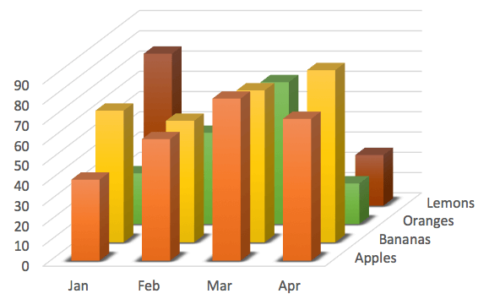
EFFECTIVE GRAPHICAL REPRESENTATION OF DATA: CHOOSING THE RIGHT VISUALIZATIONS Introduction In today’s data-driven world, effectively presenting information through graphical representation has become crucial. Choosing the right visualizations is essential for conveying insights, highlighting trends, and facilitating data-driven decision-making. However, with a wide array of available visualization options, selecting the most appropriate one can be challenging.

EFFECTIVE GRAPHICAL REPRESENTATION OF DATA: CHOOSING THE RIGHT VISUALIZATIONS Read More »

UNDERSTANDING DATA CLASSIFICATION AND PROCESSING TECHNIQUES

UNDERSTANDING DATA CLASSIFICATION AND PROCESSING TECHNIQUES Introduction: In today’s digital age, the amount of data generated and collected by organizations is growing exponentially. To make sense of this vast volume of information, data classification and processing techniques are crucial. Data classification involves organizing and categorizing data based on specific criteria, while data processing refers to

UNDERSTANDING DATA CLASSIFICATION AND PROCESSING TECHNIQUES Read More »

200 IMPORTANT MULTIPLE CHOICE QUESTIONS WITH ANSWERS RELATED TO LAW OF EVIDENCE

200 IMPORTANT MULTIPLE CHOICE QUESTIONS WITH ANSWERS RELATED TO LAW OF EVIDENCE   Which of the following is not a type of evidence under the Indian Evidence Act? a) Oral evidence b) Documentary evidence c) Circumstantial evidence d) Expert evidence Answer: d) Expert evidence The Indian Evidence Act, 1872, is applicable to which part of

200 IMPORTANT MULTIPLE CHOICE QUESTIONS WITH ANSWERS RELATED TO LAW OF EVIDENCE Read More »

CLASSIFICATION OF EVIDENCE IN INDIAN LAW: DOCUMENTARY, ORAL, AND REAL EVIDENCE

CLASSIFICATION OF EVIDENCE IN INDIAN LAW: DOCUMENTARY, ORAL, AND REAL EVIDENCE Introduction: In the Indian legal system, evidence plays a pivotal role in determining the guilt or innocence of a person. The classification of evidence is crucial for understanding its relevance and admissibility in court. Indian law recognizes three main types of evidence: documentary evidence,

CLASSIFICATION OF EVIDENCE IN INDIAN LAW: DOCUMENTARY, ORAL, AND REAL EVIDENCE Read More »

ADMISSIBILITY OF EVIDENCE IN INDIAN COURTS: KEY PRINCIPLES AND EXCEPTIONS

ADMISSIBILITY OF EVIDENCE IN INDIAN COURTS: KEY PRINCIPLES AND EXCEPTIONS Introduction: In the Indian legal system, the admissibility of evidence plays a crucial role in the determination of guilt or innocence in a court of law. The law of evidence in India is primarily governed by the Indian Evidence Act, 1872. This act lays down

ADMISSIBILITY OF EVIDENCE IN INDIAN COURTS: KEY PRINCIPLES AND EXCEPTIONS Read More »

THE INDIAN EVIDENCE ACT, 1872: A COMPREHENSIVE ANALYSIS

THE INDIAN EVIDENCE ACT, 1872: A COMPREHENSIVE ANALYSIS Introduction: The Indian Evidence Act, 1872, is a crucial legislation that governs the rules and procedures pertaining to the admissibility, relevancy, and weightage of evidence in Indian courts. It serves as the backbone of the Indian judicial system by ensuring fair and just trial proceedings. This comprehensive

THE INDIAN EVIDENCE ACT, 1872: A COMPREHENSIVE ANALYSIS Read More »

OVERVIEW OF THE LAWS OF EVIDENCE IN INDIA: AN INTRODUCTION

OVERVIEW OF THE LAWS OF EVIDENCE IN INDIA: AN INTRODUCTION Introduction: In any legal system, the concept of evidence plays a crucial role in determining the outcome of a case. Evidence provides the foundation for establishing facts and proving or disproving allegations. In India, the laws of evidence are governed by the Indian Evidence Act,

OVERVIEW OF THE LAWS OF EVIDENCE IN INDIA: AN INTRODUCTION Read More »

error: Content is protected !!
Scroll to Top