



The CEV GROUP has introduced the Registered Valuers Club, a YouTube platform created by the Council of Engineers and Valuers Group to educate and empower valuers across India through expert discussions and practical insights.
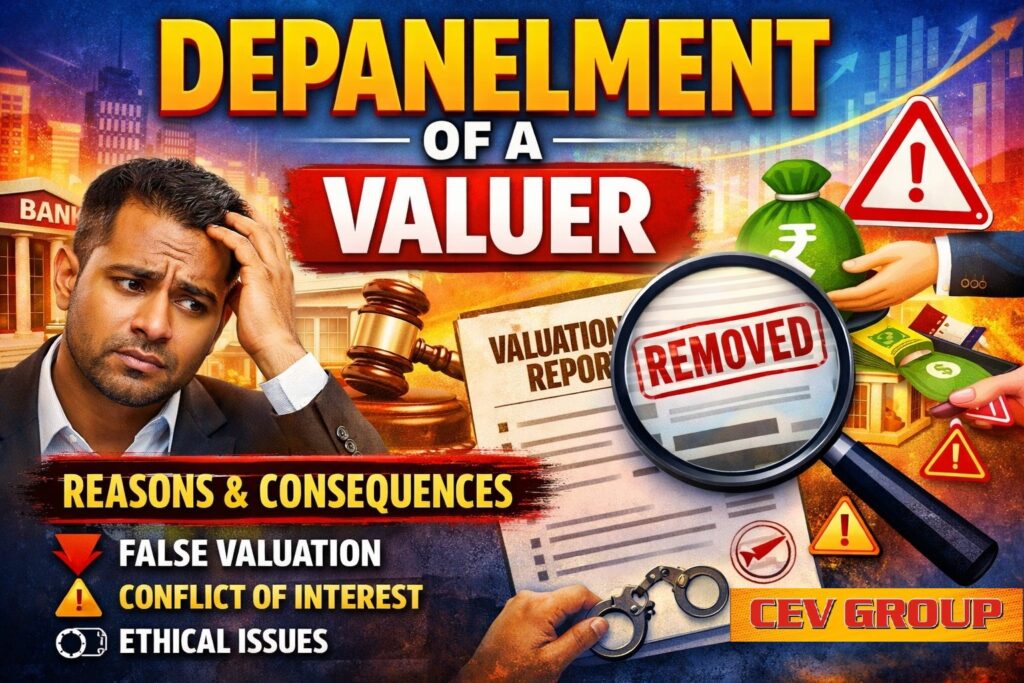
REASONS FOR DEPANELMENT OF A VALUER FROM BANKS AND FINANCIAL INSTITUTIONS
CAUSES, CONSEQUENCES, AND CORRECTIVE MEASURES
Introduction
Empanelment with banks and financial institutions is a critical professional milestone for valuers. It provides regular assignments, professional recognition, and credibility in the financial ecosystem. However, depanelment—often sudden and sometimes permanent—can significantly affect a valuer’s reputation and livelihood.
Banks and financial institutions operate under stringent regulatory, risk, and compliance frameworks laid down by RBI, IBA, internal credit policies, and vigilance guidelines. Any deviation by a valuer, whether intentional or inadvertent, may lead to suspension or permanent removal from the approved panel.
This article systematically explains the key reasons for depanelment, their implications, and practical solutions to help valuers remain compliant and professionally secure. This article aims to educate valuation professionals and promote higher standards of integrity, compliance, and professionalism within the banking and financial ecosystem.
-
Submission of Inaccurate or Inflated Valuation Reports
Reason
One of the most common reasons for depanelment is overvaluation or undervaluation of assets, particularly when it results in financial exposure or loss to the bank. Banks treat valuation as a critical risk-mitigation tool, and any inconsistency raises serious red flags.
Instances include:
- Inflated market value to accommodate higher loan eligibility
- Ignoring negative location or legal factors
- Use of unrealistic assumptions
- Mechanical adoption of guideline values without market validation
Consequences
- Immediate removal from panel
- Blacklisting across branches or regions
- Vigilance inquiry and potential civil liability
Solution / Preventive Measures
- Follow conservative, evidence-based valuation principles
- Rely on verifiable market data and site inspections
- Clearly disclose assumptions, limitations, and risks
- Maintain internal peer-review before submission
Case Illustration
A public sector bank sanctioned a term loan against an industrial plot based on a valuation report that adopted future development potential without zoning approval. During a subsequent RBI inspection, the asset was found to be grossly overvalued by nearly 35%. The valuer had relied on speculative market enquiries rather than concluded sale instances.
Outcome:
The bank suffered increased exposure in NPA classification. The valuer was immediately depanelled and reported to the controlling office.
Key Learning
Valuation must reflect present, realizable market value, not aspirational or speculative projections.
-
Deviation from Bank-Specific Valuation Guidelines
Reason
Each bank issues empanelment terms, valuation formats, and reporting instructions. Non-adherence—such as using outdated formats, missing mandatory disclosures, or non-compliance with RBI/IBA norms—often leads to depanelment.
Consequences
- Report rejection
- Suspension of new assignments
- Termination of empanelment
Solution
- Regularly update yourself with bank circulars and SOPs
- Maintain a compliance checklist for each bank
- Attend bank orientation or refresher programs where available
Case Illustration
A private sector bank prescribed a revised valuation format requiring separate land and building valuation with distress value disclosure. A valuer continued using an old format and omitted the forced sale value. During internal audit, the report was flagged as non-compliant.
Outcome:
The bank discontinued further assignments and subsequently removed the valuer from the panel.
Key Learning
Even technically sound valuations can be rejected if procedural compliance is ignored.
-
Conflict of Interest and Lack of Independence
Reason
Banks strictly prohibit valuers from undertaking assignments where:
- The borrower is a relative or known associate
- The valuer has a financial interest in the property
- The valuer is simultaneously advising the borrower
Even non-disclosure of a perceived conflict is treated as misconduct.
Consequences
- Immediate depanelment
- Vigilance and disciplinary action
- Damage to professional credibility
Solution
- Declare conflicts transparently in writing
- Refuse assignments involving personal or financial interests
- Maintain independence at all times
Case Illustration
A branch manager assigned a valuation to a valuer whose close relative was one of the co-owners of the property. The valuer did not disclose the relationship. The conflict came to light during legal scrutiny when the borrower defaulted.
Outcome:
The bank treated it as suppression of material facts and permanently blacklisted the valuer.
Key Learning
Non-disclosure of conflict is viewed more seriously than conflict itself.
-
Professional Misconduct or Ethical Violations
Reason
Acts such as:
- Accepting inducements or commissions
- Sharing confidential valuation details
- Altering reports under pressure
- Issuing backdated or manipulated reports
are treated as serious ethical breaches.
Consequences
- Permanent blacklisting
- Reporting to regulatory bodies
- Legal and criminal liability
Solution
- Strictly adhere to Code of Conduct and professional ethics
- Maintain proper documentation and audit trail
- Resist external pressure and report undue influence
Case Illustration
A vigilance inquiry revealed that a valuer had accepted “facilitation fees” through an intermediary to revise valuation figures upward to match the borrower’s loan requirement.
Outcome:
The valuer was removed from all panels, reported to the vigilance department, and faced professional disciplinary proceedings.
Key Learning
Short-term gains can permanently destroy a valuer’s career.
-
Poor Quality, Incomplete, or Delayed Reports
Reason
Banks operate under strict timelines. Delayed submissions, repetitive errors, missing annexures, unclear photographs, or vague observations reflect poorly on the valuer’s professionalism.
Consequences
- Gradual reduction in assignments
- Negative performance grading
- Eventual depanelment
Solution
- Develop standardized internal reporting systems
- Use quality checklists before submission
- Invest in professional documentation tools and training
Case Illustration
A housing finance company repeatedly received valuation reports with unclear site photographs, missing municipal approvals, and delayed submission beyond stipulated timelines. Branch feedback noted “casual reporting.”
Outcome:
The valuer was downgraded and later removed during annual panel review.
Key Learning
Consistency and quality are as important as technical knowledge.

-
False Credentials or Misrepresentation
Reason
Submission of:
- Fake experience certificates
- Misrepresentation of qualifications
- Expired registration or empanelment status
is considered fraud.
Consequences
- Immediate termination
- Legal action
- Blacklisting across institutions
Solution
- Ensure all credentials are genuine and up-to-date
- Promptly inform banks of any change in status
- Renew licenses, registrations, and memberships on time
Case Illustration
A bank discovered during re-empanelment that a valuer had claimed experience in valuing specialized industrial machinery without possessing relevant qualifications. Past reports were reviewed and found unreliable.
Outcome:
Immediate termination and cancellation of empanelment across regions.
Key Learning
Banks actively verify credentials—misrepresentation is treated as fraud.
-
Non-Compliance with Regulatory Frameworks (IBBI, RBI, etc.)
Reason
Registered Valuers are required to comply with:
- IBBI Valuation Rules, CLDs and Valuation Standards
- RBI guidelines on secured lending
- AML and KYC-related disclosures
Any regulatory lapse can trigger depanelment.
Consequences
- Reporting to regulators
- Suspension of valuation practice
- Loss of professional standing
Solution
- Regular compliance audits
- Continuous professional education (CPE)
- Follow updated valuation standards strictly
Case Illustration
A Registered Valuer failed to follow the mandatory valuation standards under the IBBI while valuing an asset under insolvency proceedings, ignoring the the highest and best use analysis and proper disclosures.
Outcome:
The valuation was challenged in proceedings, and the bank discontinued empanelment, citing regulatory risk.
Key Learning
Regulatory compliance is non-negotiable in institutional valuation.
-
Adverse Vigilance or Audit Observations
Reason
Internal bank audits, CAG audits, or vigilance investigations may flag:
- Pattern of inflated values
- Repetitive deviations
- Suspicious valuation trends
Even one adverse audit remark can lead to panel review.
Consequences
- Suspension pending inquiry
- Depanelment after investigation
Solution
- Maintain transparency and defensible valuation logic
- Preserve site records, photographs, and notes
- Cooperate fully during audits
Case Illustration
During a CAG audit of a PSU bank, repeated instances of similar overvaluation patterns by a particular valuer were observed across branches. Though no single case was conclusive, the trend raised suspicion.
Outcome:
The valuer was suspended pending inquiry and later depanelled.
Key Learning
Patterns matter—consistent deviations invite scrutiny.
-
Negative Feedback from Branches or Credit Departments
Reason
Repeated complaints regarding:
- Unprofessional conduct
- Lack of cooperation
- Poor communication
can influence empanelment decisions.
Consequences
- Downgrading of empanelment status
- Removal from preferred panel
Solution
- Maintain professional behavior at all times
- Communicate clearly and promptly
- Respect institutional processes
Case Illustration
Several branch heads reported that a valuer frequently argued with credit teams, refused clarifications, and delayed site visits. Although no valuation error was found, the feedback did affect performance ratings.
Outcome:
The valuer was removed during routine panel rationalisation.
Key Learning
Professional conduct influences empanelment as much as competence.
-
Involvement in Litigation or Criminal Proceedings
Reason
Valuers facing serious allegations, fraud cases, or criminal proceedings—especially related to financial matters—may be depanelled to protect institutional reputation.
Consequences
- Temporary or permanent removal
- Industry-wide impact on credibility
Solution
- Maintain clean professional records
- Disclose ongoing litigation if required
- Seek legal resolution at the earliest
Case Illustration
A valuer was named in a charge sheet relating to a loan fraud case where an inflated valuation was alleged. Even before conviction, the bank terminated empanelment to mitigate reputational risk.
Outcome:
Temporary depanelment turned permanent due to prolonged litigation.
Key Learning
Legal entanglements can have industry-wide professional consequences.

Final Note: From Risk to Resilience
Depanelment is not merely an administrative action—it is a serious professional setback. In most cases, depanelment arises not from lack of technical knowledge, but from compliance failures, ethical lapses, or procedural negligence.
Valuers must recognize that banks and financial institutions expect:
- Integrity over convenience
- Professional independence over accommodation
- Compliance over speed
By adopting robust internal systems, continuous learning, and strict ethical discipline, valuers can not only avoid depanelment but also enhance their long-term credibility and standing in the financial ecosystem.
Real-life banking experiences demonstrate that depanelment is rarely sudden—it is usually the result of repeated lapses, ignored warnings, or ethical compromises.
For valuers, long-term survival in institutional panels depends on:
- Technical accuracy
- Procedural discipline
- Ethical independence
- Regulatory compliance
- Professional conduct
Valuation is not merely a technical exercise—it is a fiduciary responsibility carrying legal, financial, and reputational implications.

🔷 1. TOP 10 REASONS WHY VALUERS GET DEPANELLED
📌 Most Common Triggers Identified by Banks
1️⃣ Inflated or inaccurate valuation
2️⃣ Non-compliance with bank formats & SOPs
3️⃣ Conflict of interest (declared or undeclared)
4️⃣ Ethical misconduct or inducements
5️⃣ Poor-quality or delayed reports
6️⃣ False credentials or misrepresentation
7️⃣ Violation of RBI / IBBI regulations
8️⃣ Adverse audit or vigilance observations
9️⃣ Negative feedback from branches
🔟 Legal or criminal proceedings
🛑 Key Message:
Technical skill alone does not protect empanelment—compliance and integrity do.
🔷 2. WHAT BANKS EXPECT FROM A PANEL VALUER
✔ Independence & objectivity
✔ Conservative and defensible valuation
✔ Timely and complete reports
✔ Regulatory and SOP compliance
✔ Transparency in assumptions
✔ Ethical conduct
✔ Professional communication
📊 Bank Perspective:
A valuer is a risk-mitigation partner, not a loan facilitator.
🔷3. RED FLAGS THAT ALERT BANK AUDIT & VIGILANCE TEAMS
🚩 Repeated high valuations across branches
🚩 Identical valuation patterns
🚩 Missing site photographs or approvals
🚩 Frequent revisions without justification
🚩 Pressure-based value adjustments
🚩 Use of outdated guideline rates
🚩 Non-disclosure of adverse factors
⚠️ Reality Check:
Even one red flag can trigger panel review.
🔷 4. REAL-LIFE CONSEQUENCES OF DEPANELMENT
❌ Loss of assignments
❌ Reputation damage across institutions
❌ Industry-wide blacklisting
❌ Reporting to regulatory bodies
❌ Legal and vigilance scrutiny
❌ Difficulty in re-empanelment
📉 Impact:
Depanelment affects not just income, but long-term professional credibility.
🔷 5. HOW TO SAFEGUARD YOUR EMPANELMENT
🛡 Professional Survival Checklist
✔ Follow bank-specific SOPs strictly
✔ Disclose conflicts in writing
✔ Maintain audit-ready documentation
✔ Attend refresher & compliance training
✔ Avoid borrower or intermediary influence
✔ Keep credentials updated
✔ Follow IBBI Valuation Standards
✅ Golden Rule:
If a valuation cannot be defended before an auditor or court—do not sign it.
🔷 6. COMMON MYTHS AMONG VALUERS — BUSTED
❌ “Everyone inflates value”
❌ “Branch manager asked me to revise”
❌ “Audit won’t check old reports”
❌ “One mistake won’t matter”
✔ Truth:
Banks maintain digital records, pattern analytics, and audit trails.
🔷 7. DEPANELMENT: A PREVENTABLE RISK
📌 Observed Pattern in Real Cases
🔹 80% cases → Compliance & ethical lapses
🔹 15% cases → Procedural negligence
🔹 5% cases → Pure technical error
📊 Inference:
Depanelment is usually avoidable with discipline and awareness.
🔷 8 FINAL TAKEAWAY- VALUATION IS A FIDUCIARY ROLE, NOT A SERVICE JOB
“A valuer protects the bank first, the borrower second, and himself always.”
✔ Integrity is your strongest credential
✔ Independence is non-negotiable
✔ Compliance is your insurance